

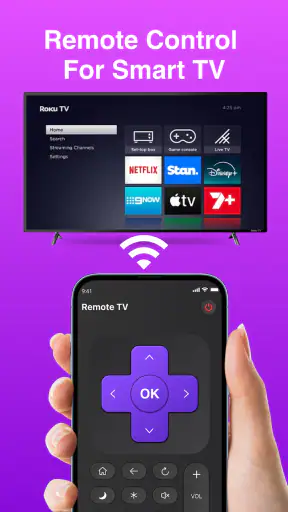
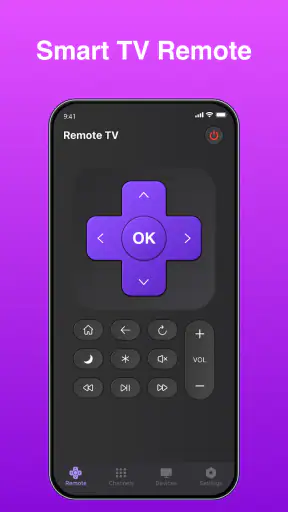
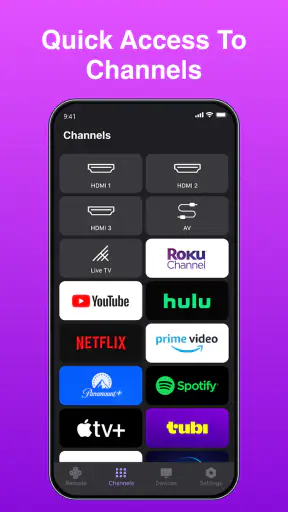
I tested Smart Remote - Easy TV Control as a practical replacement for the physical remote, and my first impression was straightforward: this is a focused tools app rather than an entertainment platform packed with extras. Its purpose is to make everyday television control easier from a phone. That narrow goal is also its main appeal. I did not have to learn a complicated dashboard or sort through unrelated functions before reaching the controls I wanted.
Developed by Figuredin, the app is free and aimed at everyone, which makes it easy to consider for a shared home, a guest room, or a television that seems to lose its remote every other day. It runs on devices using at least Android 11, and the current version is 1.5.0. The app has built a sizeable audience, with more than five million installs, an average score of 4.2, and roughly eighty-nine thousand ratings. Those figures suggest that the simple remote-control idea is useful to many people, although they should not be mistaken for a guarantee that every television and phone combination will behave identically.
How clearly the controls work for different users
Readability and navigation without unnecessary clutter
The strongest part of the experience is its directness. A television remote is normally a collection of familiar actions: changing channels, adjusting sound, navigating menus, and turning the set on or off. A phone-based remote can easily become confusing if those actions are hidden behind decorative screens or crowded menus. Smart Remote - Easy TV Control is most useful when it keeps the interaction close to that familiar mental model.
I found that this kind of layout can help people who are not comfortable with complicated apps. Someone setting up a television for a parent, an older relative, or a visitor does not want to explain several layers of navigation. The app’s value comes from reducing the distance between opening the tool and performing a basic action. The best way to use it is to treat it as a dedicated control surface, not as a general smart-home command center.
Text readability matters more than it might seem in a remote app. Physical remotes often rely on small labels and tightly packed buttons, while a phone can offer a more familiar touchscreen environment. That can be helpful for users who prefer looking directly at a screen instead of identifying tiny raised buttons by touch. It can also make the controls easier to understand for someone who regularly forgets what an unfamiliar remote symbol means.
There is a trade-off, though. A physical remote gives immediate tactile feedback: you can feel a button, press it without looking, and keep your eyes on the television. A phone does not automatically provide that same certainty. If the interface places several actions near each other, a user with reduced visual precision may still need to look carefully before tapping. The phone’s larger, brighter display can improve visibility, but it does not remove the need for accurate touch.
For a household with several people, I would spend a little time deciding where the phone will be kept and who will use it. A remote app is much more convenient when the device is charged and nearby. If the phone is usually in another room, locked away, or being used for calls, the old plastic remote may still be quicker for routine channel changes. This is one of the less obvious trade-offs: digital availability is flexible, but it depends on the phone being ready at the moment you need it.
Motor and sensory considerations in ordinary use
A phone can be easier to grip than a slim remote for some users, especially when the physical remote has very small buttons or a slippery shape. Touch controls may also reduce the force needed to operate a button. That can be useful for someone who finds repeated pressing uncomfortable or who has difficulty isolating small physical keys.
At the same time, touchscreen control is not universally easier. Users with tremors, limited fine-motor control, or difficulty holding a phone steady may accidentally tap neighboring controls. The experience depends on the size and spacing of the controls, as well as on the user’s phone. A larger handset may offer more room to work with, while a smaller screen can make precise taps more demanding.
There is also a sensory difference between a phone remote and a traditional one. A physical remote provides clicks and resistance that confirm an action. With a phone, the user generally relies more on the visual response and on the television reacting. That can be perfectly comfortable for someone who sees the display clearly, but less reassuring for someone who depends on tactile confirmation. I would not present this app as a complete substitute for accessible hardware in every household.
For users with hearing loss, the app may still be useful because the control itself does not require listening to spoken instructions. The important feedback is whether the television changes volume, channel, or menu state. However, the app cannot by itself make the television’s own menus, alerts, or content more accessible. Its role is limited to sending control actions, so expectations should stay realistic.
Users with low vision may appreciate being able to use their phone’s familiar display settings, such as enlarged system text or a brighter screen, where those settings affect the app. That is a practical reason to try it before buying a specialized remote. Still, enlarged system text does not necessarily enlarge every control equally, and high contrast on the phone does not guarantee the same result inside the television interface. The phone can improve the control experience, but it cannot redesign the television’s menus.
Situational access: when a phone remote makes more sense
The most convincing everyday scenario is a shared living room where the physical remote keeps disappearing. I can imagine opening the app from the sofa, adjusting the sound during a program, and returning the phone to the same table afterward. A family member who already carries a phone may find that more dependable than searching under cushions or checking another room.
It can also help when a television is mounted in a room used by guests, children, or people who are unfamiliar with the original remote. A phone interface may feel more recognizable than a collection of unlabeled buttons. If someone needs only basic control, the app can be less intimidating than a remote with keys for functions they never use.
Another useful situation is temporary replacement. If the original remote is misplaced or stops working, a free app is an attractive first step before spending money on a universal remote. The low cost makes experimentation easy: install it, see whether it fits the television setup, and keep it if the household finds it comfortable. Since the app is free, the decision is mainly about compatibility and convenience rather than purchase price.
It may also suit people who already use their phone as an assistive device in other parts of daily life. Keeping one familiar screen nearby can be simpler than learning a separate control accessory. The benefit is greatest when the user is comfortable with touch interaction and can keep the phone charged. For someone who struggles with phone unlocking or frequently leaves the device elsewhere, the convenience can disappear quickly.
One practical tip is to test the app at a calm time rather than waiting until the television needs urgent control. Check the basic actions first, then try the controls you actually use most. This makes it easier to notice whether the setup is comfortable for the person who will rely on it. In a shared home, let that person perform the test themselves; an app that feels obvious to the installer may not feel obvious to the eventual user.
What it offers compared with usual alternatives
The usual alternatives are the television’s original remote, a universal physical remote, or another remote-control app. The original remote remains the most dependable option when it is available and comfortable to use. It works without taking over a phone, offers tactile buttons, and can often be operated without looking. For users with limited touch accuracy or for people who watch television while their phone is charging elsewhere, that physical option may be better.
A universal remote can be a stronger choice for a household that wants one dedicated device shared by everyone. It avoids battery concerns on a personal phone and does not compete with calls, messages, or other tasks. Its weakness is the setup process and the need to adapt to another button layout. Smart Remote - Easy TV Control is more appealing when the household already prefers phone-based control and wants to avoid buying another accessory.
Compared with a random remote app, this one benefits from a clear identity: it is presented as a simple television-control tool, not as a broad collection of unrelated utilities. That focus can make it easier to recommend to someone who wants fewer options. The limitation is that simplicity may not satisfy users looking for advanced home-theater control, a single interface for many kinds of devices, or a dedicated physical solution.
The app’s popularity is encouraging, but I would still avoid assuming that a high install count means universal compatibility. Television control depends on the particular equipment and the way the phone communicates with it. If a household cannot tolerate any setup uncertainty, keeping the original remote as a backup is sensible. I see this app as a convenient alternative, not as a reason to throw away every physical controller immediately.
Remaining barriers and points to check before relying on it
The first barrier is dependence on the phone. A dead battery, a misplaced handset, a locked device, or a phone being used by somebody else can prevent access at exactly the wrong moment. This matters especially for users who need a reliable control method rather than an occasional convenience. A simple routine helps: keep one charged phone in a known location and retain the physical remote when possible.
The second barrier is precision. Touchscreen controls can be friendly for some motor abilities and frustrating for others. If a user accidentally activates neighboring actions, the app may create more work than the original remote. Try it with the person who will use it, not only with the person who installs it. Watch how they hold the phone, whether they need both hands, and whether they can identify the correct control without assistance.
The third barrier is the television itself. The app is designed to control a Smart TV, but the practical result still depends on the target television and the connection between the phone and the set. A user should confirm that the basic controls respond before making the app the only remote in the home. If the television is older, unusually configured, or used with several external devices, a universal remote may provide broader coverage.
There is a social barrier as well. In a family, one person may install the app while another person is expected to use it. That can create dependence on the installer if the interface, setup, or phone settings are unfamiliar. I recommend showing the regular user how to open it and where the essential controls are, then allowing them to practice. The app works best when it increases independence rather than simply moving the remote task to somebody else’s phone.
Privacy and distraction are not the same issue as accessibility, but they affect the experience. A phone remote places television control beside notifications, calls, and other interruptions. Someone who wants a quiet, single-purpose device may prefer a physical remote. Conversely, a user who already has the phone in hand may find the app less disruptive than searching for hardware. The right choice depends on the household’s habits rather than on one universal definition of convenience.
Who should use it, and who should choose something else?
I would recommend Smart Remote - Easy TV Control to people who want a free way to try phone-based television control, especially when the original remote is often misplaced. It is a sensible option for users who are comfortable with touchscreens, can keep a phone charged, and value a familiar display over tactile buttons. Its Everyone content rating also makes it suitable to consider for a broad household audience.
I would be more cautious for someone with significant tremors, very limited touch accuracy, or a strong need for physical feedback. That person may do better with a large-button remote or another dedicated controller. I would also choose a universal physical remote for a television setup involving several devices, because a focused TV app may not replace all the functions of a more comprehensive hardware solution.
The app is also not the right answer for someone who expects advanced automation or a complete accessibility layer for the television. It controls the television experience; it does not automatically change the television’s own text size, audio options, menu design, or content accessibility. Those needs should be evaluated separately through the television’s built-in settings or specialized equipment.
An inclusive verdict after testing the everyday fit
My overall view is positive but practical. Smart Remote - Easy TV Control succeeds because it concentrates on a familiar problem and makes the phone a possible replacement for a missing or inconvenient remote. The free price lowers the risk of trying it, while its current version and broad adoption make it a reasonable app to test for a compatible Smart TV.
Its inclusive value comes from choice. Some people will find a phone screen easier to read, hold, and understand than a small-button remote. Others will need tactile feedback, larger dedicated controls, or a device that remains available without a personal phone. Neither experience is wrong. The app is most accessible when it is offered as an additional control option, not forced as the only one.
If you are deciding whether to install it, begin with the person who will use the television most often. Let them test the essential controls in their usual viewing position, with their usual phone, lighting, and seating arrangement. That simple trial reveals more than a generic promise of easy control. For my needs, it is a useful, focused tool and a good emergency replacement, provided I keep a backup plan for the situations where a touchscreen is less dependable than a physical remote.


